Understanding the Pineware Brand Legacy
History and reputation of Pineware in the kitchen industry
In a country where the kettle is a national treasure, Pineware has quietly become the unsung hero of the South African kitchen. Since the 1960s, this local brand has built a reputation for sturdy, dependable cookware that survives the daily grind of loadshedding and family feasts.
The pineware pressure cooker, in particular, stands as a testament to their engineering. It is not flashy, but it works. That reliability has turned generations of home cooks into loyalists. What sets Pineware apart? A few things:
- Local manufacturing that supports the economy
- Affordable pricing without sacrificing quality
- Designs that handle high heat and rough handling
This legacy is not about nostalgia. It is about a brand that understands the realities of South African households. When you buy a pineware pressure cooker, you are buying decades of tested performance, not a marketing gimmick.
Key construction features that set Pineware apart
I have lifted heavier, pricier pots, but few have felt as solid as a pineware pressure cooker. The brand legacy rests on construction choices you can verify with your own hands. The thick aluminium base distributes heat without fuss, and the reinforced rim tolerates the constant pressure cycles that wear down cheaper rivals.
Three features stand out:
- Precision machined safety valves that maintain steady steam release
- Cast stainless steel handles, bolted through the body rather than spot welded
- An anodised interior that resists staining and does not react with acidic stews
This is why the pineware pressure cooker remains a fixture in South African kitchens. It is engineered for endurance, and the details prove it.
Available models and size options for different households
Understanding the Pineware brand legacy starts with a simple observation: families who bought one in the 1980s still use it today. That longevity shapes every factory decision. When a pineware pressure cooker leaves the production line, it carries decades of small refinements. This is accumulated engineering knowledge, passed between generations of skilled workers.
The range covers practical household needs without clutter. I have watched these pots handle everything from quick midweek curries to Sunday potjies, and the size options reflect real cooking habits. A couple in a small flat will appreciate the 6 litre model for weeknight stews. A family of four often chooses the 8 litre option, especially when cooking whole chickens or large soup batches. Larger households, those who regularly cook for gatherings, tend toward the 10 litre version.
Available sizes include:
- 6 litre: compact, suited to small kitchens
- 8 litre: the standard family choice
- 10 litre: built for bulk cooking
Each pineware pressure cooker matches a specific cooking rhythm. Choosing the right volume means less energy wasted and meals that fit your household exactly.
Warranty and customer support from the manufacturer
Ask any South African home cook about after-sales service and you will hear stories of frustration. Pineware operates differently. The warranty on a pineware pressure cooker covers manufacturing defects without fuss, and the manufacturer keeps spare parts in stock for years after a model stops production. A phone call to the Johannesburg support office usually ends with a replacement valve or gasket dispatched the same day.
Support staff understand the product. Many have worked there for years and know which seal fits which pot without consulting a manual. This institutional memory means repairs happen quickly, not after weeks of back-and-forth emails.
That is why old Pineware units still circulate in second-hand shops and family kitchens.
Mastering Pressure Cooking Techniques
Step-by-step operating guide for first-time users
First-time pressure cooking involves heat, steam, and a bit of nerve. This ritual gets simpler with a solid unit. Start by checking the gasket. A loose seal means steam escapes and your meal stays undercooked. Place ingredients inside, close the lid until it clicks, then set the heat. Listen for the gentle hiss. That hiss is your cue.
Here is the order of operations:
– Read the manual once, then again
– Add liquid before anything else
– Lock the lid properly
– Wait for steady pressure
Resist the urge to peek. Opening early releases steam and extends cooking time. Let the pressure release naturally or use the quick release valve. The pineware pressure cooker handles both methods. Your first meal might be bland. Your second will not.
Pressure release methods: natural release versus quick release
Patience matters in pressure cooking. Once the heat is off, the pineware pressure cooker still holds a chamber of pressurised steam. How you release that steam shapes the final texture of your meal.
Natural release lets the pressure drop gradually. The food continues cooking in residual heat, which works well for stews, beans, and tough cuts of meat. Quick release vents steam immediately through the valve. This method suits vegetables, fish, and foods that overcook in seconds.
Choose the method based on the dish:
– Use natural release for dense ingredients and to avoid splatter.
– Use quick release for tender ingredients and when you are in a hurry.
The pineware pressure cooker handles both methods with equal reliability. Your only task is knowing which one your meal demands.
Adjusting cooking times for different ingredients
Cooking times inside a pressure chamber are rarely uniform. A 2 centimetre cube of butternut softens in four minutes; a whole chicken needs thirty five. Density, fibre structure, and water content dictate how fast heat penetrates each ingredient. The pineware pressure cooker maintains steady pressure, yet each batch must be calibrated to the slowest item.
Root vegetables soften quickly when cut small, but legumes resist. Meat with connective tissue requires sustained heat to break down collagen. Here is a practical reference for common South African staples, one I keep taped inside my cupboard:
- Lamb neck pieces: 25 to 30 minutes
- Jasmine rice: 6 minutes
- Butternut cubes: 4 minutes
- Dried beans: 20 minutes after soaking
These figures assume a standard pressure level, and they hold up well in my kitchen! Whole joints and small cuts respond differently. The pineware pressure cooker provides a reliable baseline, while repeated use refines the numbers.
Adapting conventional recipes to high-pressure cooking
Conventional recipes assume a slow, forgiving heat. A stew that simmers for three hours asks you to trust evaporation, collagen breakdown, and flavour layering. High pressure shortens that timeline, but it also changes the physics. The liquid barely reduces. The pineware pressure cooker holds steam tightly, so an open pot recipe needs less stock. You cut liquid, not flavour.
Spices behave differently inside a sealed chamber. Whole aromatics release more aggressively under pressure, while fresh herbs lose character within minutes. A conventional braise calls for celery, carrot, and onion in rough chunks. In a pressure cooker, those vegetables become unpleasantly soft unless you stagger their addition.
What changes most is the order of operations:
- Brown meat first, then deglaze with a fraction of the wine
- Add root vegetables whole or in large pieces
- Finish with tender greens after pressure releases
The pineware pressure cooker forces you to rethink assumptions rather than simply shorten time.
Using the trivet and other included accessories effectively
The trivet inside your pineware pressure cooker is not a spacer. It creates a platform for steaming vegetables, poaching eggs, and reheating leftovers without soaking them in liquid. Place fish fillets on the trivet with water below, and the steam does the rest.
A steamer basket expands this capability. Stack it above the trivet for layered cooking:
- Potatoes on the bottom rack
- Broccoli in the basket above
- Both ready at the same time
For grains, use the trivet with a heatproof bowl. Rice and quinoa cook evenly without scorching. The accessories turn the pineware pressure cooker into a multi-level kitchen.
Safety Guidelines Every User Should Know
Pre-use safety checks including gasket and valve inspection
Before you turn your Pineware pressure cooker into a steam-powered rocket, give it a quick once-over. That rubber gasket around the lid is your first line of defense. If it feels brittle, stretched, or cracked, replace it without debate. Same goes for the pressure valve. A clogged valve turns dinner into a physics experiment you didn’t sign up for. Check for food debris stuck in the steam vent, and ensure the float valve moves freely. These checks take ninety seconds and spare you a kitchen ceiling that looks like pasta art.
A Pineware pressure cooker is forgiving, but only if you respect its parts. The gasket needs a proper seat, and the valve needs to whistle when it should. Nothing here requires engineering skills, just a little attention. Treat these inspections like brushing your teeth: boring, fast, and non-negotiable. Your future self, enjoying a perfectly cooked stew, will thank you.
Common user mistakes that compromise safety
The trickiest part of owning a pineware pressure cooker is not the cooking, it is the restraint. Most safety failures come from impatience or overconfidence. A classic mistake is opening the lid while the float valve is still raised. That valve is the physical signal that pressure is still doing its job. Ignore it and you get a face full of steam.
Another common slip is treating the maximum fill line as a rough guide. Overfilling blocks the vent or causes food to splatter through the release valve. Both are messy and dangerous. Keep the pot at two thirds full for most recipes, and always keep at least 250 ml of liquid inside. The pressure needs something to push against.
- Check the float valve before every opening, not just at the start.
- Reduce heat if the hiss becomes a shriek. That sound means pressure is climbing too fast.
- Release steam in a controlled way, never with your hand hovering over the vent.
Using a tea towel to twist the knob is fine, but keeping your face and arm clear of the steam path is non negotiable. The pineware pressure cooker performs best when you let it work. Rush it and you turn a simple meal into a burn risk. Respect the pressure and it will respect your schedule.
Proper venting and depressurization procedures
Pressure can read zero on the gauge, but the float valve still stands. That is the moment when most hands reach for the lid. Stop. Proper venting begins before you open anything. Turn the pressure release handle so the steam stream faces the back of the stove, away from cabinets and faces. Then lift the handle in short bursts. Let pressure escape in pulses, not one violent blast. That restraint keeps food from erupting through the valve.
Depressurization needs the same patience. A pineware pressure cooker dropped from high pressure too quickly can seize the gasket or warp the lid over time. Match the method to the meal:
- Natural release for soups, stews and large cuts of meat.
- Quick release for vegetables and delicate fish.
Always use a long utensil or tea towel around your hand for the knob. Keep the float valve in your peripheral vision until it falls completely. That fall is the only true signal the chamber is safe.
Recognizing warning signs of wear or malfunction
A pineware pressure cooker will not announce its own failure. It will give signals, and those signals arrive as changes. A low hiss that appears after months of silence. A lid that turns stiffly, not from pressure, but from a warped rim. Discoloration along the base points to heat damage that erodes the metal’s integrity.
Watch for these signs:
- Steam escaping from the handle instead of the valve
- A float valve that sticks before dropping
- Hairline fractures showing as pale veins across the lid
Each flaw makes the chamber less predictable. The hiss grows louder. The lid locks tighter. At some point, the cooker will decide for itself, and that decision will not be soft.
Child safety and kitchen placement best practices
A pineware pressure cooker on a rear burner keeps its valve beyond a child’s reach. The handle should angle inward, away from the counter edge. Children move fast, and a curious hand can find a steam vent in seconds. The metal stays hot long after the flame dies, and the countertop that felt safe in the morning carries a quiet hazard by late afternoon.
Place the cooker where foot traffic cannot jostle it. A busy passage turns a slight knock into a tipped vessel. The control dial should face the adult, not the open floor. When the cooker is idle, lock the lid and store it back from the edge.
Where the cooker sits matters as much as how it is used:
- Keep it at least 20 cm from any counter edge.
- Angle the handle toward the wall.
- Never let the valve face a walkway.
- Move it to a high cupboard once it cools.
Delicious Recipes to Try in Your Cooker
Quick weeknight soups and stews ready in under 30 minutes
A pineware pressure cooker transforms a Tuesday evening. Lentil and chorizo stew, normally a two hour affair, lands on the table in twenty five minutes. The sealed pot traps steam, forcing flavour into every ingredient. For a creamy mushroom soup, sauté the onions and garlic directly in the base, then add stock and barley. Lock the lid, bring to pressure, and let the cooker work while you set the table. Try these combinations:
- Butternut and coconut milk soup with a hint of chilli.
- Beef and vegetable stew with pearl barley.
- Chicken and sweetcorn soup with fresh ginger.
Each recipe needs only a quick natural release for the best texture. The pineware pressure cooker handles the rest, leaving you with a hearty meal and a quiet kitchen.
Tender meat dishes that save hours of braising time
Braising is a noble art, but it demands patience. The pineware pressure cooker turns an oxtail from a weekend project into a Tuesday night miracle. Those collagen rich cuts, the ones that usually need four hours of babysitting, collapse into fork tender glory in under an hour.
Red wine and rosemary, honey and soy, or just a reckless amount of garlic. The cooker locks in the moisture, so your meat does not dry out while you attend to other things. This is where the pot earns its shelf space.
- Beef short ribs with chakalaka and smoked paprika
- Lamb shanks with a sticky rooibos and balsamic glaze
- Pork belly with apple and fennel, no crackling drama
Each one spares you the oven heat and the vigilance. Your pineware pressure cooker does the heavy lifting, and you get to appear heroic.
Vegetarian and pressure cooked bean dishes
Beans are a different beast altogether. A pineware pressure cooker turns dried chickpeas, sugar beans, or lentils into a velvety pot of nourishment without the overnight soak or the endless simmer. The sealed environment forces liquid into the legumes, softening their skins while preserving their shape.
Try a few straightforward combinations:
- Butter beans with tomato, onion, and a hint of smoked paprika
- Chickpeas in a spicy coconut curry with baby spinach
- Sugar beans with chakalaka and a squeeze of lemon
Each dish comes together in under thirty minutes, and the pot does the thinking for you.
Grains, rice, and one-pot pasta meals
Grains and rice behave differently under pressure, and the pineware pressure cooker handles them with quiet authority. Basmati, jasmine, or even brown rice emerge separate and tender, with far less water than the stovetop method demands. Pasta, too, adapts beautifully. A one-pot spaghetti with tinned tomatoes, garlic, and a splash of Worcester sauce becomes a midweek workhorse.
For those who like variety:
– Lemon herb rice with roasted garlic
– Creamy mushroom risotto without endless stirring
– Macaroni in a sharp cheddar sauce
All of these come together in a single pot, and the pineware pressure cooker does the measuring for you. You simply set it and walk away. No scorched bottoms, no sticky clumps, just consistent results every time.
Unexpected desserts like cheesecake and steamed puddings
The appliance that braises a silverside in forty minutes also turns out a cheesecake with a smooth, dense crumb. Sealed steam inside the pressure cooker holds a constant temperature, so custards and puddings set evenly without an oven.
- Steamed syrup pudding with grated lemon zest
- Vanilla bean cheesecake on a crushed biscuit base
- Chocolate self-saucing pudding for a wet weekend afternoon
I have lifted a dark ginger pudding from my pineware pressure cooker on a rainy Highveld evening, and the steam carried the scent of treacle through the kitchen. Desserts that normally demand a water bath and a watchful eye simply sit and cook. No cracked tops, no curdled custard, no fuss. The pressure does the work while you clear the table and put the kettle on.
Cleaning, Care, and Troubleshooting
Disassembly and proper cleaning techniques for every component
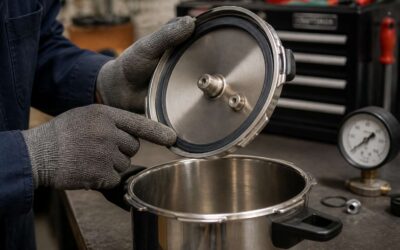
The cleaning routine for a pineware pressure cooker is where small habits prevent large problems. After each use, lift the gasket and wash it in warm soapy water, never leaving it in place. The lid’s vent pipe and float valve deserve individual attention.
A soft brush clears food particles from the steam vent. The aluminium body handles mild detergent, but abrasive scouring pads strip its finish. For stubborn residue, soak the base for twenty minutes.
Disassembly for troubleshooting follows a simple rhythm:
- Remove the pressure regulator or weighted valve
- Pull the sealing ring from its groove
- Unscrew the float valve assembly from beneath the lid
- Rinse each part separately and dry before reassembly
Sticking lids usually signal a worn gasket or residue buildup along the rim. A vinegar rinse every few weeks clears mineral deposits from hard water, a common issue for South African kitchens. That simple step extends the life of a pineware pressure cooker.
Descaling and removing mineral buildup over time
Hard water in South African municipalities leaves a visible residue on every pot it touches. The pineware pressure cooker is no exception. Over months, calcium deposits build along the lid rim and inside the vent pipe, slowing heat transfer and extending cooking times. The warning signs are subtle:
- Cooking times stretch longer than usual
- Steam hisses irregularly from the vent
- A white crust appears around the float valve
Descaling a pineware pressure cooker is straightforward. Fill the base with equal parts water and white vinegar, up to the halfway mark. Run the cooker at low pressure for five minutes, then release the steam and let it cool. Pour out the mixture and rinse thoroughly. For stubborn scale, I recommend a plastic scraper to lift softened deposits without scratching the aluminium. Repeat every six to eight weeks in areas with severe water hardness. A clean vent pipe releases pressure evenly.
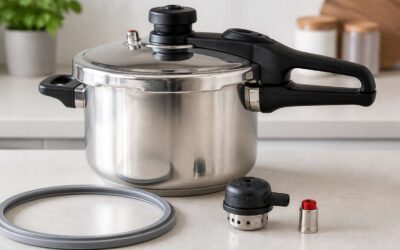
When and how to replace gaskets, valves, and safety plugs
I rarely replace parts on a schedule. Instead, I inspect my pineware pressure cooker before every use. The gasket is the first thing to check. If it feels sticky, develops cracks, or no longer sits flat in the lid, it needs a new one. The valve assembly deserves the same attention. A slow or uneven release of steam signals a blockage or a worn stem. The safety plug, often overlooked, is a soft metal fuse. It deforms under excessive pressure and must be replaced immediately after any overheating incident.
Here is what I look for:
– Gasket: press a thumb into the rubber. If the indentation remains for more than a few seconds, replace it.
– Valve: the weight should lift cleanly off the vent pipe with no resistance.
– Safety plug: any discolouration or bulging means it has activated.
Keep a spare set of all three items on hand. A new gasket and valve cost far less than a ruined dinner. And never stretch an old gasket to make it last. Proper care of your pineware pressure cooker extends its life.
Troubleshooting common issues like leaks or the lid locking
A pressure cooker that hisses around the lid is not broken. It is asking for a wipe. Most pineware pressure cooker complaints start with a grain of rice lodged under the seal. Fix that and the hiss disappears. A stiff locking mechanism needs a drop of cooking oil on the hinge pin.
For everyday care, cool the cooker completely before washing. Plunging hot metal into cold water warps the base, which creates the very leaks you tried to avoid. Store the lid upside down on the pot so the gasket stays dry.
Troubleshooting begins with observation:
- Steam escaping near the handle means the gasket is not seated evenly.
- A lid that refuses to open means the pressure pin has not dropped. Wait.
- A slow rattle during cooking is normal venting, not a fault.
Listen to your pineware pressure cooker. It signals trouble before dinner is ruined.
Storage solutions to protect the cooker and extend its lifespan
One splattered stovetop taught me everything about pineware pressure cooker care. The mess is inevitable. The rust is not. After each meal, wash the base with warm water and mild detergent. The gasket needs separate attention. Soap and a soft brush remove food residue without stretching the rubber. Rinse thoroughly. A soapy film degrades the seal over time. Dry every component completely before reassembly. Humidity inside the pot invites mould and corrosion. For storage, follow a few rules:
- Store the lid inverted on the base to protect the gasket.
- Keep the cooker on a dry shelf, not hanging by its handles.
- Place a cloth between lid and base if stacking is unavoidable.
Check the safety plug periodically for cracks. A stored pineware pressure cooker should be ready to perform, not a decoration.
Comparison and Buying Considerations
How the brand measures up against other leading pressure cooker names
The South African kitchen landscape is a crowded one, with international brands jostling for shelf space alongside local stalwarts. When you place the pineware pressure cooker next to its imported rivals, the comparison often boils down to philosophy. Many premium names sell you complex digital interfaces and a hefty price tag for smart features you may rarely use. Pineware operates on a different principle, one focused on mechanical robustness and straightforward, repeatable results that do not require a manual to decode.
The most compelling case for the pineware pressure cooker rests on value and service. Imported units can be cheaper upfront, but they carry hidden costs. Replacement gaskets or valves for foreign brands often require long waits and expensive shipping, a practical headache for any home cook. Pineware parts are readily available, and the construction is simpler to maintain. When you consider the total cost of ownership, the local brand offers a better long-term financial picture.
For the discerning buyer, the decision often hinges on these points:
– Do you prioritize smart technology and pre-programmed settings, or do you prefer manual control?
– Is the availability of local spares a priority for your peace of mind?
– Does the cooker’s build quality match the demands of your weekly cooking volume?
The high-end imports boast sleek aesthetics and precise temperature probes, which are excellent for sous-vide enthusiasts. However, the pineware pressure cooker answers a more fundamental question. It asks whether you want a device that depends on delicate electronics, or a resilient tool that relies on pure physics. For the South African household that values durability and straightforward functionality above all else, the choice becomes clear. You are not just buying a pot; you are investing in a system that keeps working, meal after meal, without fuss. The proof is in the countless kitchens where these units have simmered for decades.
Budget-friendly options for beginners versus premium upgrades
Perhaps the most reassuring discovery for a first-time buyer is that the pineware pressure cooker range does not punish frugality. The entry-level models are stripped of ornament, but they retain the same thick-walled base and dependable locking mechanism as their more expensive siblings. What do you pay extra for?
- Larger capacity for batch cooking
- Reinforced handles that feel more secure during lifting
- A smoother finish that resists staining and is easier to wipe down
None of these additions alter the cooking physics. If you are feeding a small family and learning the rhythm of high-pressure cooking, the budget pineware pressure cooker will serve you admirably. If you host large gatherings or find yourself wrestling with heavy pots, the premium upgrade is a genuine comfort. The choice should reflect your habits, not your ego.
Understanding capacity needs based on family size and cooking style
Most households overestimate their cooking needs by at least two litres. That error leads to wasted counter space and longer heating times. A pineware pressure cooker should be chosen by measuring your largest typical batch, not your imagination.
For a couple or small family, a 4 litre model handles daily meals without excess. For four or more people, 6 litres is the practical baseline. If you cook once and eat twice, move up a size. The extra headroom also lets you cook a whole chicken or large cuts of beef.
Consider your cooking style:
- Occasional use for stews and rice: 4 to 5 litres
- Weekly batch cooking or meal prep: 6 to 8 litres
- Entertaining or preserving: 8 litres or more
When you match the pineware pressure cooker’s capacity to your actual habits, every meal becomes straightforward. The right size makes it a tool you reach for, not a cabinet dweller.
Where to find authentic accessories, parts, and replacement units
Don’t let a frayed gasket or a warped valve lure you into a substandard purchase. A pineware pressure cooker is engineered to precise tolerances, so a mismatched counterfeit part can turn a trusted pot into a hazard. When comparing prices, remember that authenticity carries a cost.
Before you buy any accessory, match the model number stamped on the base. The original spring and sealing ring must fit exactly. I always verify the seller’s reputation and look for the official trademark.
- Check the official Pineware website for a list of approved stockists in South Africa.
- Contact the manufacturer’s service centre directly for replacement gaskets and safety plugs.
- Visit established kitchen supply stores in your city, not only online marketplaces.
For replacement units, weigh the cost of a full new pot against repairing an old one. Often, a damaged base is not worth the effort. A second-hand pineware pressure cooker might lack the updated safety mechanisms, so spending a bit more on a new unit gives you peace of mind!

0 Comments